

 Our Mission & Values
 Governance & Partnerships
 Global Reach
 Our impact
 Agricultural Solutions
 Our Environmental Responsibility
 All Our Magazines
 Articles Library
 Our Subscriptions


Supercritical CO₂ decontamination unlocks new opportunities for recycled plastics
Authors: Géraldine Cabrera¹, Project Manager, Materials & Recycling, IPC
Jérémy Peyroux, Packaging Laboratory Project Manager, IPC
Skander Mani, Head of the Recycling R&D Programme, IPC
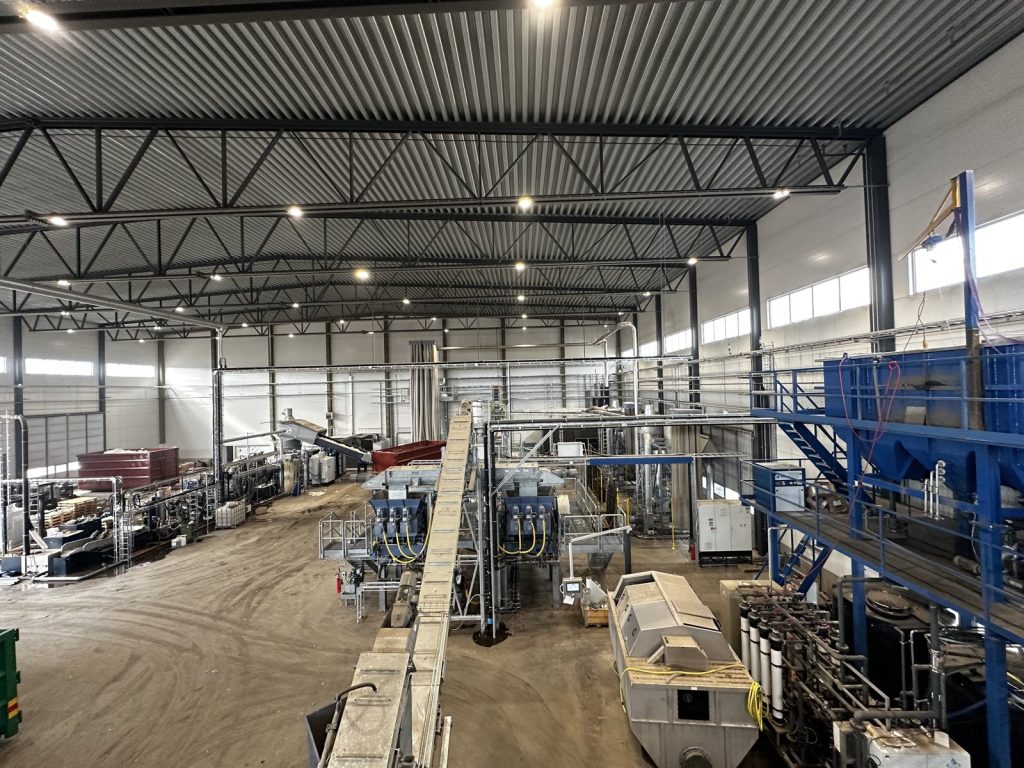
As part of its range of expertise in plastics materials and processes, IPC² is working on the decontamination of recycled materials. Their researchers explain the mechanism behind purification using supercritical CO₂ and its development on a pre-industrial scale.
The challenge of decontaminating recycled plastics
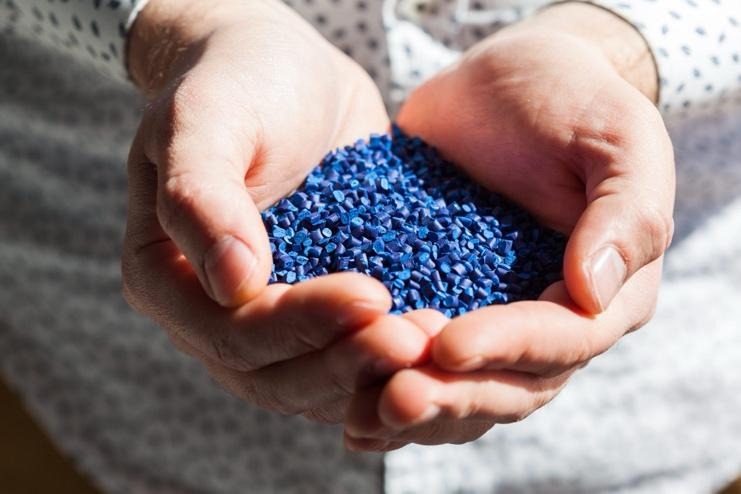
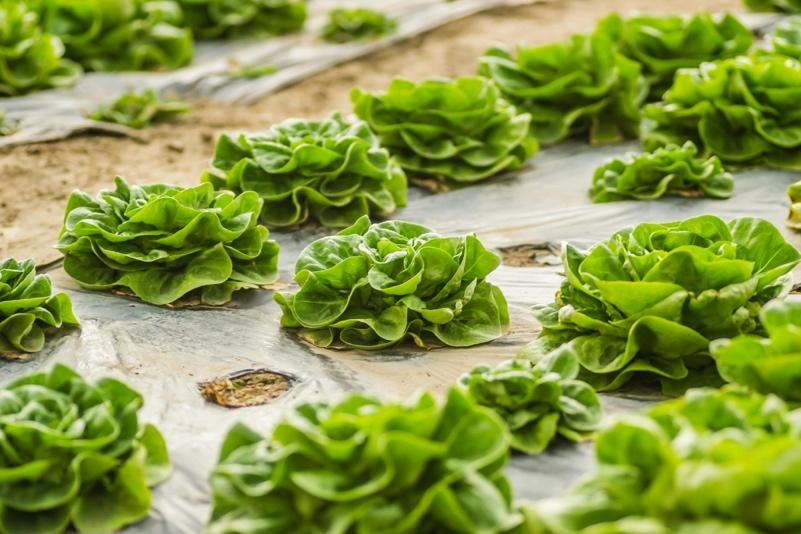
Plastics contamination remains one of the main obstacles to obtaining high-quality recycled materials, as packaging and products that come into contact with food, hydrocarbons or organic substances absorb compounds that penetrate deep into the polymer matrix and are resistant to conventional washing methods. In this context, supercritical carbon dioxide (supercritical CO₂) extraction is emerging as an advanced purification technology that complements mechanical recycling. Unlike chemical recycling, which breaks down the polymer into monomers, this approach preserves the material while improving its purity. As well, it is particularly suitable for polyolefins (polyethylene, polypropylene) widely used in packaging and plasticulture.
This technology can help meet the requirements of European Regulations (EU) 2022/1616 and (EU) No 10/2011 governing the production of recycled materials suitable for food contact, thereby paving the way for closed-loop recycling systems [4]. Its application to post-consumer polymers forms part of the development of new technologies and requires the gradual generation of data demonstrating control over inputs, the efficacy and reproducibility of decontamination, the monitoring of critical parameters, and the safety of the resulting materials. This requirement is less of an obstacle than a guiding framework for research and industrialisation.
There are many variations of passages of Lorem Ipsum available, but the majority have suffered alteration in some form, by injected humour, or randomised words which don't look even slightly believable. If you are going to use a passage of Lorem Ipsum, you need to be sure there isn't anything embarrassing hidden in the middle of text. All the Lorem Ipsum generators on the Internet tend to repeat predefined chunks as necessary, making this the first true generator on the Internet. It uses a dictionary of over 200 Latin words, combined with a handful of model sentence structures, to generate Lorem Ipsum which looks reasonable. The generated Lorem Ipsum is therefore always free from repetition, injected humour, or non-characteristic words etc.
From this magazine