

 Our Mission & Values
 Governance & Partnerships
 Global Reach
 Our impact
 Agricultural Solutions
 Our Environmental Responsibility
 All Our Magazines
 Articles Library
 Our Subscriptions


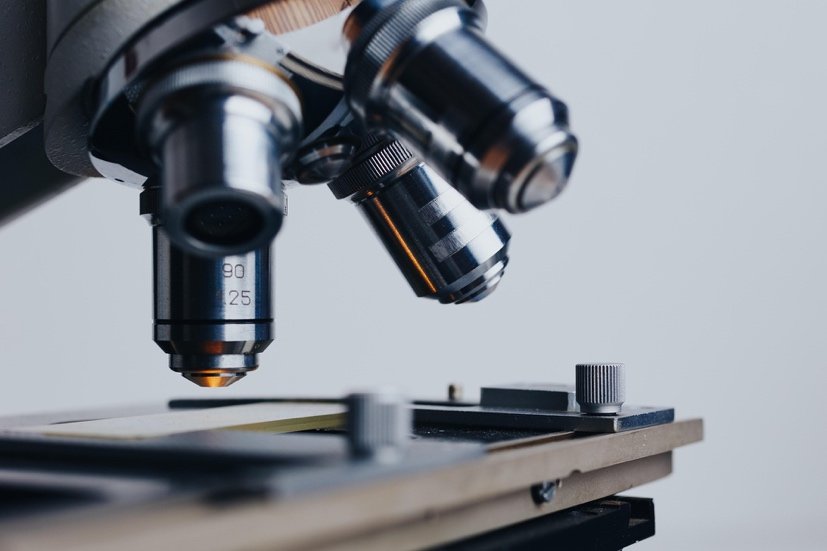
Microplastics: from scientific findings to practical solutions
Author: Plasticulture and Agri-environment Committee (CPA)
The MINAGRIS project held its final conference on 16 September 2026 in Brussels. The CPA was in attendance: the industry is actively monitoring work on microplastics and is calling to further refine source identification and sampling methods.
The agricultural plastics’ industry full commitment
We are committed to working in partnership with the scientific community and building bridges between industry and research. The CPA has therefore monitored and participated in the work of the European projects PAPILLONS¹ and MINAGRIS², as well as several projects in France (BIOMALEG, MICROSOF, PRO). The CPA also organised its latest Technical Day on 20 March 2025 in Bordeaux, France, in partnership with INRAE³. The aim of this event was to understand the extent to which agricultural plastics contribute to microplastics (MPs) pollution in agricultural soils and to identify the sources of these microplastics.
“Building bridges between industry and research”
There are many variations of passages of Lorem Ipsum available, but the majority have suffered alteration in some form, by injected humour, or randomised words which don't look even slightly believable. If you are going to use a passage of Lorem Ipsum, you need to be sure there isn't anything embarrassing hidden in the middle of text. All the Lorem Ipsum generators on the Internet tend to repeat predefined chunks as necessary, making this the first true generator on the Internet. It uses a dictionary of over 200 Latin words, combined with a handful of model sentence structures, to generate Lorem Ipsum which looks reasonable. The generated Lorem Ipsum is therefore always free from repetition, injected humour, or non-characteristic words etc.
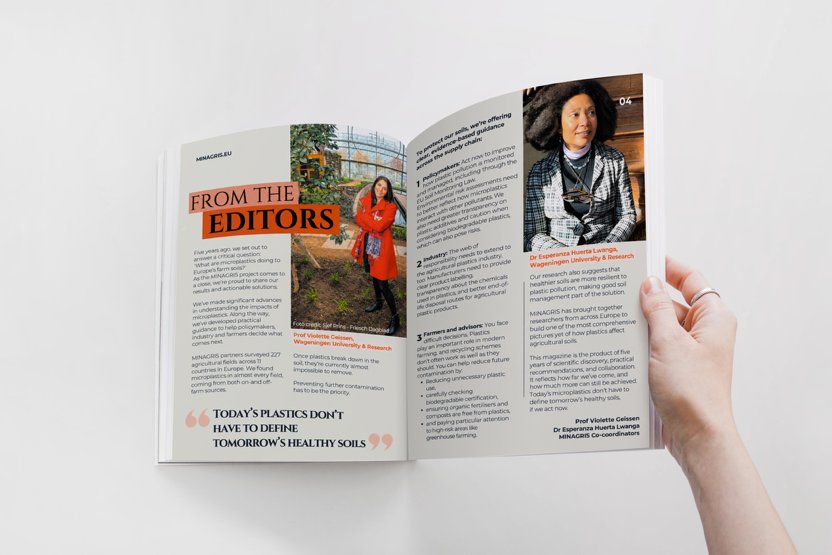
From this magazine