

 Our Mission & Values
 Governance & Partnerships
 Global Reach
 Our impact
 Agricultural Solutions
 Our Environmental Responsibility
 All Our Magazines
 Articles Library
 Our Subscriptions


Microplastics in agricultural soils: bridging the gap between science and practice
Author :Bernard Le Moine, Senior Expert in Agricultural Plastics & Circular Economy
The presence of microplastics in agricultural soils is now the subject of a widely shared scientific consensus. At the same time, the generalised attribution of responsibility to agricultural plastics is not, at this stage, supported by sufficiently robust evidence. Bernard Le Moine, former chairman of APE Europe¹, offers a critical reading of this gap and advocates for an approach grounded in the analysis of real practices, management systems, and agronomic trade-offs.
The reality of microplastics
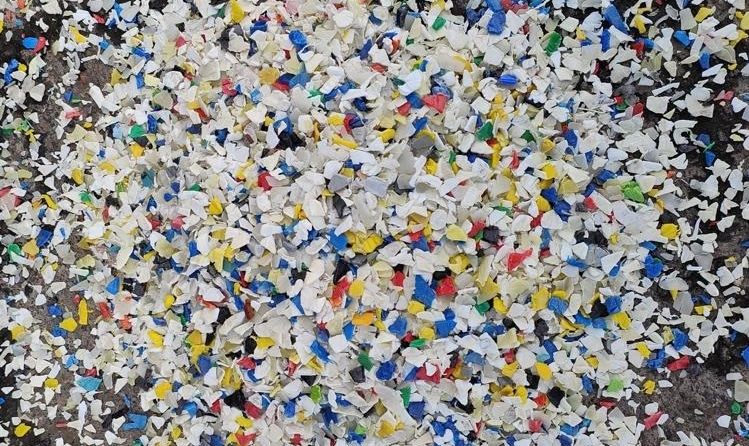
The issue of microplastics has progressively emerged as a global environmental concern, extending from marine environments to terrestrial ecosystems. Agricultural soils are now recognised as significant reservoirs of these particles, as highlighted by several recent synthesis studies, notably those conducted by the FAO and European initiatives such as MINAGRIS. These studies confirm the widespread presence of microplastics in cultivated soils, with varying levels depending on context.
The impacts of microplastics on soils and plants have also been increasingly documented. They can affect soil structure, alter porosity, influence water dynamics, and interact with microbial communities. Effects on plant growth have been observed in some cases, although their magnitude remains dependent on experimental conditions. Overall, the existence of such effects is no longer in question, even if their ecological significance is still debated.
A central issue concerns the origin of this pollution. Identified sources are multiple and, in many cases, predominantly exogenous to agriculture: atmospheric deposition, application of sewage sludge, compost derived from urban waste, and hydrological transfers. However, studies consistently highlight a major methodological limitation: the absence of reliable methods to precisely attribute microplastics to specific sources. This uncertainty makes any clear allocation of responsibility particularly fragile.
There are many variations of passages of Lorem Ipsum available, but the majority have suffered alteration in some form, by injected humour, or randomised words which don't look even slightly believable. If you are going to use a passage of Lorem Ipsum, you need to be sure there isn't anything embarrassing hidden in the middle of text. All the Lorem Ipsum generators on the Internet tend to repeat predefined chunks as necessary, making this the first true generator on the Internet. It uses a dictionary of over 200 Latin words, combined with a handful of model sentence structures, to generate Lorem Ipsum which looks reasonable. The generated Lorem Ipsum is therefore always free from repetition, injected humour, or non-characteristic words etc.
From this magazine