

 Notre mission et nos valeurs
 Gouvernance et partenariats
 Portée mondiale
 Notre impact
 Solutions pour l'agriculture
 Notre responsabilité environnementale
 Tous nos magazines
 Bibliothèque d'articles
 Nos abonnements


Microplastiques dans les sols agricoles : combler le fossé entre la science et la pratique
Auteur : Bernard Le Moine, Expert senior en plastiques agricoles et économie circulaire
La présence de microplastiques dans les sols agricoles fait désormais l'objet d'un consensus scientifique largement partagé. Dans le même temps, l'attribution généralisée de la responsabilité aux plastiques agricoles n'est pas, à ce stade, étayée par des preuves suffisamment solides. Bernard Le Moine, ancien président de l'APE Europe¹, propose une lecture critique de cette lacune et plaide pour une approche fondée sur l'analyse des pratiques réelles, des systèmes de gestion et des compromis agronomiques.
La réalité des microplastiques
La question des microplastiques s'est progressivement imposée comme une préoccupation environnementale mondiale, s'étendant des environnements marins aux écosystèmes terrestres. Les sols agricoles sont désormais reconnus comme des réservoirs importants de ces particules, comme le soulignent plusieurs études de synthèse récentes, notamment celles menées par la FAO et des initiatives européennes telles que MINAGRIS. Ces études confirment la présence généralisée de microplastiques dans les sols cultivés, à des niveaux variables selon le contexte.
L'impact des microplastiques sur les sols et les plantes est également de plus en plus documenté. Ils peuvent affecter la structure du sol, modifier la porosité, influencer la dynamique de l'eau et interagir avec les communautés microbiennes. Des effets sur la croissance des plantes ont été observés dans certains cas, bien que leur ampleur dépende des conditions expérimentales. Dans l'ensemble, l'existence de ces effets n'est plus remise en question, même si leur importance écologique est encore débattue.
Une question centrale concerne l'origine de cette pollution. Les sources identifiées sont multiples et, dans de nombreux cas, principalement exogènes à l'agriculture : dépôt atmosphérique, épandage de boues d'épuration, compost dérivé de déchets urbains et transferts hydrologiques. Cependant, les études soulignent systématiquement une limitation méthodologique majeure : l'absence de méthodes fiables permettant d'attribuer précisément les microplastiques à des sources spécifiques. Cette incertitude rend particulièrement fragile toute attribution claire des responsabilités.
Il existe de nombreuses variantes de passages de Lorem Ipsum, mais la majorité d'entre eux ont été altérés d'une manière ou d'une autre, en y injectant de l'humour ou des mots aléatoires qui n'ont pas l'air un tant soit peu crédibles. Si vous souhaitez utiliser un passage de Lorem Ipsum, vous devez vous assurer que rien d'embarrassant n'est caché au milieu du texte. Tous les générateurs de Lorem Ipsum sur Internet ont tendance à répéter des morceaux prédéfinis selon les besoins, ce qui fait de ce générateur le premier véritable générateur sur Internet. Il utilise un dictionnaire de plus de 200 mots latins, combiné à une poignée de structures de phrases modèles, pour générer un Lorem Ipsum d'apparence raisonnable. Le Lorem Ipsum généré est donc toujours exempt de répétitions, d'humour injecté, de mots non caractéristiques, etc.
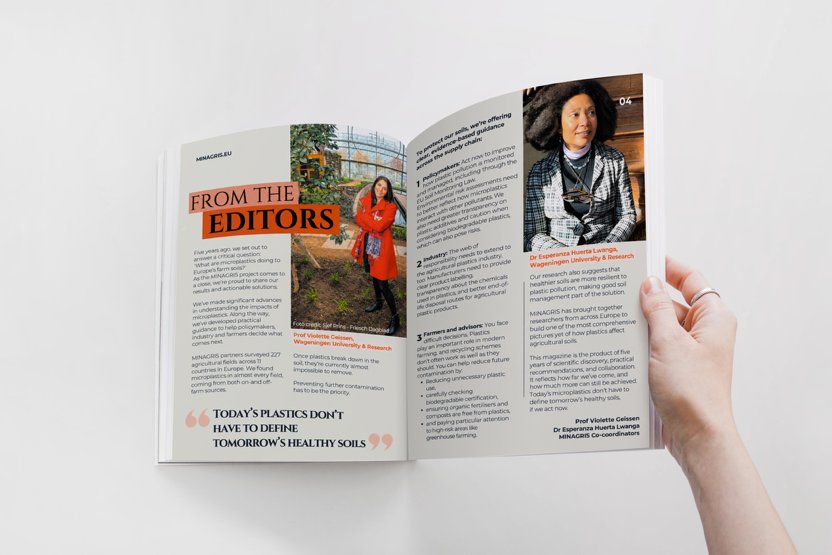
Extrait de ce magazine