

 Notre mission et nos valeurs
 Gouvernance et partenariats
 Portée mondiale
 Notre impact
 Solutions pour l'agriculture
 Notre responsabilité environnementale
 Tous nos magazines
 Bibliothèque d'articles
 Nos abonnements


Évaluation de l'empreinte plastique de l'agriculture biologique : une étude de cas
AUTEURS : Victoria ECKERLE, chef de projet AgriRePlas, Christian LOTT, codirecteur, HYDRA Marine Sciences & Georg SCHMÄLZLE, directeur, Biogärtnerei Schmälzle
AgriRePlas¹ vise à réduire l'empreinte plastique de l'agriculture dans la région du Rhin supérieur. Les coordinateurs nous font part de l'étude préliminaire à l'origine du projet.
Pour connaître l'utilisation actuelle des plastiques dans l'horticulture biologique, nous avons développé et appliqué une évaluation complète de l'empreinte plastique dans le cadre d'une étude de cas portant sur une exploitation agricole du sud-ouest de l'Allemagne.
Méthodologie et base de données
L'empreinte plastique a été définie comme la masse totale des plastiques utilisés tout au long du processus de production, de la culture aux fruits et légumes prêts à la vente. Toutes les cultures de l'exploitation ont été regroupées en 7 types de culture, et tous les produits plastiques utilisés dans la production et l'emballage des plantes ont été enregistrés. La demande en plastique a été calculée sur la base de l'utilisation de plastique par hectare, de la surface cultivée, de la durée d'exposition et d'un facteur de répartition du temps. Nous avons développé et alimenté une base de données spécifique par le biais d'entretiens détaillés avec les agriculteurs.
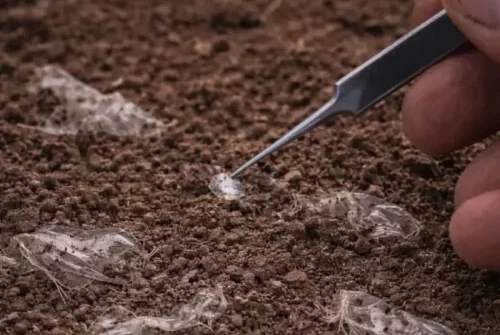
La demande totale en plastique de l'exploitation a ainsi été estimée à 10,5 tonnes en 2023, l'utilisation de plastique variant considérablement d'une culture à l'autre (de 5 g de plastique par kg de chou chinois à 69 g par kg de mûres). En outre, un modèle conceptuel de flux de matières a été élaboré pour retracer les intrants en plastique, les temps d'exposition, les processus de fragmentation et les voies de fin de vie. Ce modèle a mis en évidence les points de fuite potentiels ainsi que la fin de vie réelle des produits en plastique, du recyclage à l'incinération, tout en tenant compte de l'accumulation de fragments dans les sols.
Il existe de nombreuses variantes de passages de Lorem Ipsum, mais la majorité d'entre eux ont été altérés d'une manière ou d'une autre, en y injectant de l'humour ou des mots aléatoires qui n'ont pas l'air un tant soit peu crédibles. Si vous souhaitez utiliser un passage de Lorem Ipsum, vous devez vous assurer que rien d'embarrassant n'est caché au milieu du texte. Tous les générateurs de Lorem Ipsum sur Internet ont tendance à répéter des morceaux prédéfinis selon les besoins, ce qui fait de ce générateur le premier véritable générateur sur Internet. Il utilise un dictionnaire de plus de 200 mots latins, combiné à une poignée de structures de phrases modèles, pour générer un Lorem Ipsum d'apparence raisonnable. Le Lorem Ipsum généré est donc toujours exempt de répétitions, d'humour injecté, de mots non caractéristiques, etc.
Extrait de ce magazine