

 Our Mission & Values
 Governance & Partnerships
 Global Reach
 Our impact
 Agricultural Solutions
 Our Environmental Responsibility
 All Our Magazines
 Articles Library
 Our Subscriptions


Microplastics risks of agricultural mulch films: why material systems matter in field use

AUTHORS : Qi LIU, Associate Professor (corresponding author: liuqi@caas.cn) & Yihang LI, Graduate student
Key Laboratory of Prevention and Control of Residual Pollution in Agricultural Film
Ministry of Agriculture and Rural Affairs
Institute of Environment and Sustainable Development in Agriculture
Chinese Academy of Agricultural Sciences
There are fundamental differences in the generation, transformation, transport, and end of life of different types of agricultural mulch films in the field environment, which directly determine the risk of microplastic release. Researchers from the Chinese Academy of Agricultural Sciences give us an insight based on the different types of mulch films.
Polyethylene Mulching Films
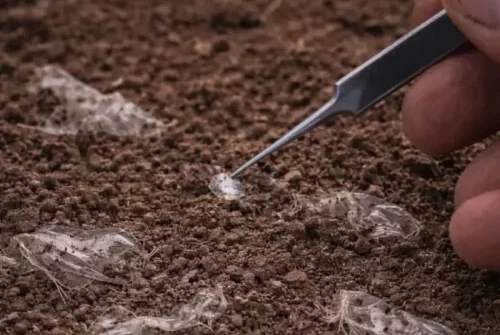
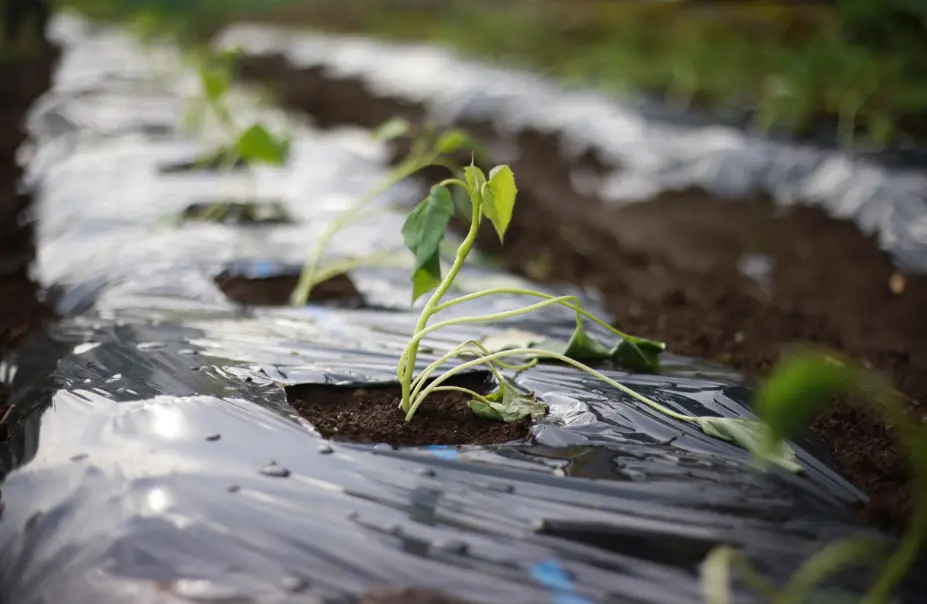
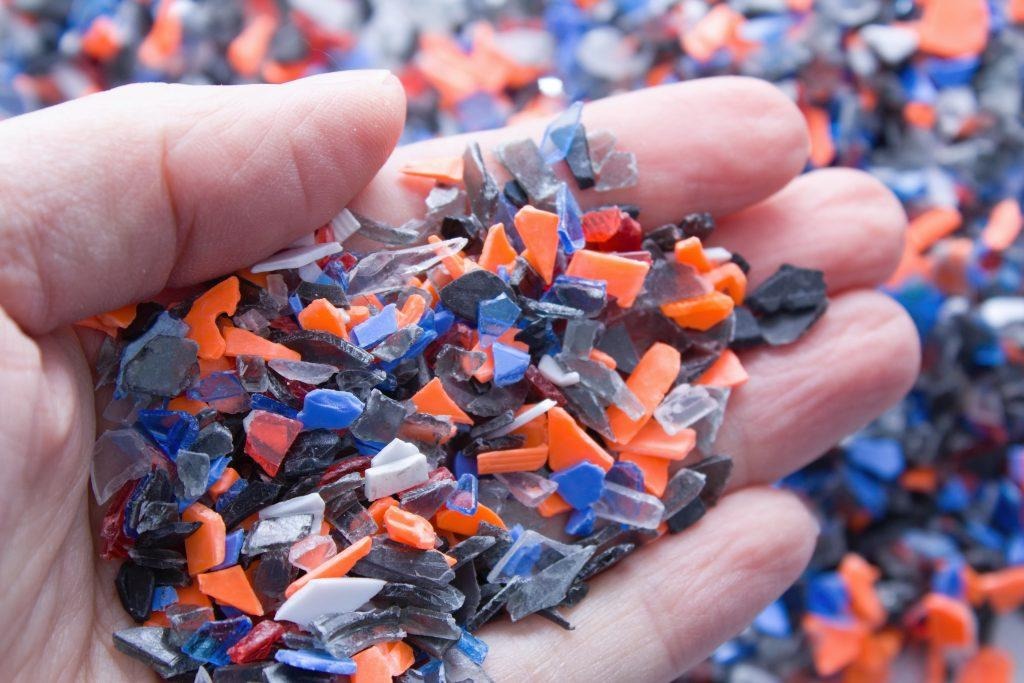
At the molecular levers, polyethylene (PE) is a linear polymer formed through the homopolymerisation of hundreds to thousands of ethylene molecules or copolymerisation with a small quantity of 1-olefin. During the field aging process, polyethylene mulch films are subject to thermal stress, moisture, mechanical abrasion and the ultraviolet (UV) exposure primarily originating from sunlight, causing chain scission, embrittlement and subsequent fragmentation into microplastics (MPs).
In actual production and application, the quality of raw materials is one of the key factors affecting the stability of polyethylene film. Research has shown that low-quality PE (virgin or recycled) exhibits reduced mechanical strength, and is more susceptible to accumulate oxidative functional groups, such as hydroxyl and carboxyl groups, during the long-term natural degradation process. This oxidative degradation is often accompanied by polymer chain breakage and a decline in material structure and mechanical properties. This makes low-quality PE more likely to fracture under oxidative aging stress, consequently, to generate higher quantities of MPs. On the contrary, by appropriately adding stabilising agents such as antioxidants, light stabilisers and UV absorbers to the system can significantly delay its UV photoaging process, effectively inhibit photo-oxidation degradation, and maintain higher mechanical properties at the same time, thereby potentially reducing the release of MPs.
Photo-oxidative Degradable Mulch Films
Photo-oxidative degradable mulch films are a type of agricultural mulching material that contains photo initiators or oxidation catalysts to promote their physical fragmentation and chemical degradation in the presence of light and thermal exposure.
There are many variations of passages of Lorem Ipsum available, but the majority have suffered alteration in some form, by injected humour, or randomised words which don't look even slightly believable. If you are going to use a passage of Lorem Ipsum, you need to be sure there isn't anything embarrassing hidden in the middle of text. All the Lorem Ipsum generators on the Internet tend to repeat predefined chunks as necessary, making this the first true generator on the Internet. It uses a dictionary of over 200 Latin words, combined with a handful of model sentence structures, to generate Lorem Ipsum which looks reasonable. The generated Lorem Ipsum is therefore always free from repetition, injected humour, or non-characteristic words etc.
From this magazine