

 Our Mission & Values
 Governance & Partnerships
 Global Reach
 Our impact
 Agricultural Solutions
 Our Environmental Responsibility
 All Our Magazines
 Articles Library
 Our Subscriptions


Assessing the plastic foot – Print of organic agriculture : a case study
AUTHORS : Victoria ECKERLE, Project Manager AgriRePlas, Christian LOTT, Co-Director, HYDRA Marine Sciences & Georg SCHMÄLZLE, Director, Biogärtnerei Schmälzle
AgriRePlas¹ aims at reducing the plastic footprint in agriculture across the Upper Rhine region. The coordinators share with us the preliminary study leading to the project.
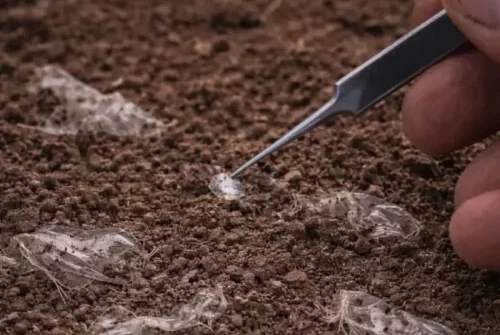
To capture the current use of plastics in organic horticulture, we developed and applied a comprehensive plastic footprint assessment as a case study of a farm in southwest Germany.
Methodology and data base
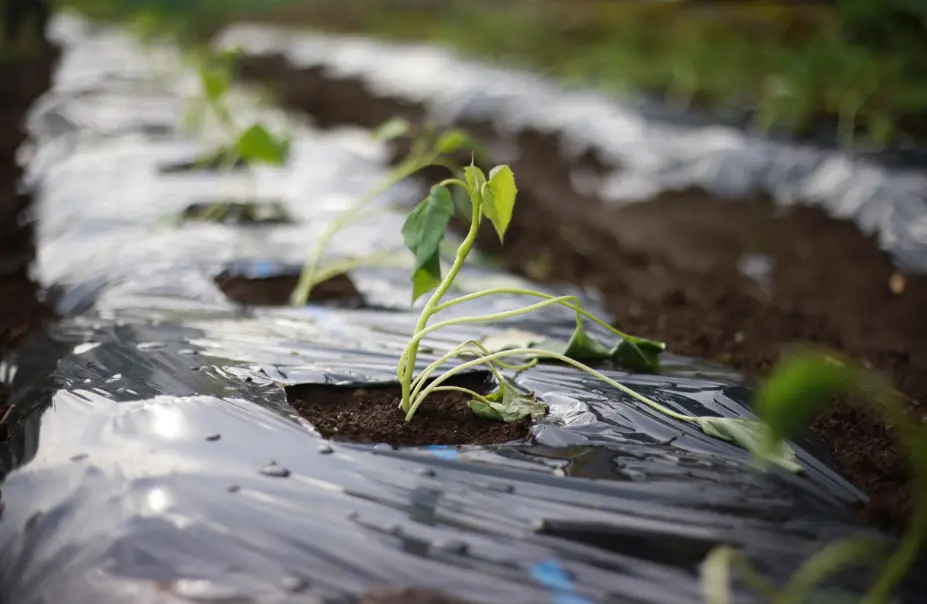
The plastic footprint was defined as the total mass of plastics used throughout the entire production process, from cultivation to ready-to-sell fruits and vegetables. All crops grown on the farm were grouped into 7 cultivation types, and all plastic products used in plant production and packaging were recorded. Plastic demand was calculated based on plastic use per hectare, cultivated area, exposure time and a time-allocation factor. We developed and populated a dedicated database through detailed interviews with the farmers.
The total plastic demand of the farm was thus estimated at 10.5 t in 2023, plastics use varying widely between crops (from 5 g of plastic per kg of Chinese cabbage to 69 g per kg of blackberries). In addition, a conceptual material flow model was developed to trace plastic inputs, exposure times, fragmentation processes and end-of-life pathways. This model highlighted potential leakage points as well as the actual end-of-life of plastic products, from recycling to incineration, while also accounting for fragment accumulation in soils.
There are many variations of passages of Lorem Ipsum available, but the majority have suffered alteration in some form, by injected humour, or randomised words which don't look even slightly believable. If you are going to use a passage of Lorem Ipsum, you need to be sure there isn't anything embarrassing hidden in the middle of text. All the Lorem Ipsum generators on the Internet tend to repeat predefined chunks as necessary, making this the first true generator on the Internet. It uses a dictionary of over 200 Latin words, combined with a handful of model sentence structures, to generate Lorem Ipsum which looks reasonable. The generated Lorem Ipsum is therefore always free from repetition, injected humour, or non-characteristic words etc.
From this magazine