

 Our Mission & Values
 Governance & Partnerships
 Global Reach
 Our impact
 Agricultural Solutions
 Our Environmental Responsibility
 All Our Magazines
 Articles Library
 Our Subscriptions


The plastisphere – a journey from soil to human health

Author : Edoardo Puglisi, Full Professor of Agricultural Microbiology, Università Cattolica del Sacro Cuore (Italy), Esperanza Huerta Lwanga, PhD, Research Associate, Wageningen University (Netherlands), Deborah Talbot, PhD, Writer and Research Communications Specialist, University of Gloucestershire (UK)
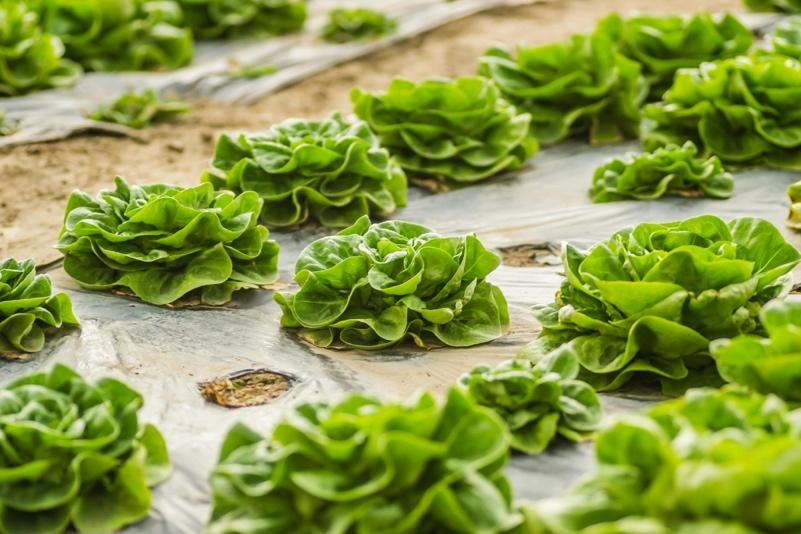
We have heard much in recent years about the impact of microplastics on the environment, and there is a growing body of science aiming to understand how they affect soil, animal and human health. While there are advantages of using plastics in farming and food production concerns are rising because of their negative externalities. What follows is just some of what researchers from MINAGRIS (MIcro- and Nano-plastics in AGRIcultural Soils) have found.
A matter of size
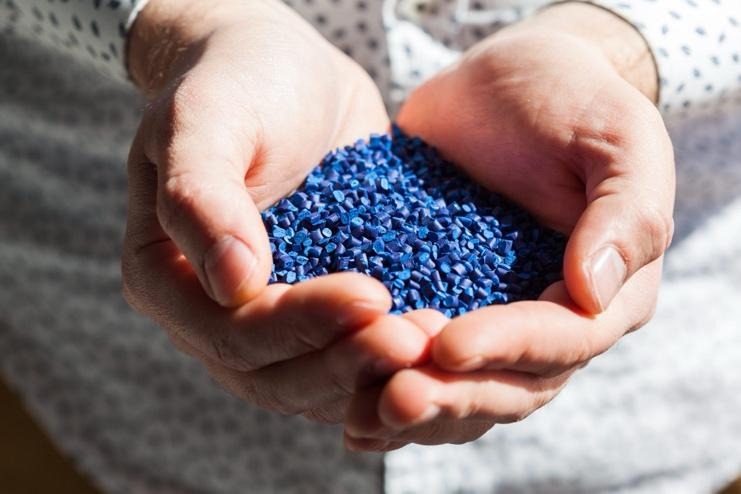
Plastics and biobased plastics are known to fragment into smaller and smaller particles, leading to the formation of microplastics (MPs, between 5 cm and 1μm) and nanoplastics ( (<1μm) that can cross cellular barriers in plants, animals and humans. In the MINAGRIS project we have conducted controlled experiments where different plastics (Low-density polyethylene (LPDE), Polybutylene Adipate Terephthalate (PBAT), and 20-30% starch-based) were buried in agriculture soils for 18 months.
Results indicated very small changes in the structure of the plastics and their disaggregation into smaller sizes. We also found that fragmentation and degradation were coupled with the release and leaching in the soil of derivatives and additives whose identity is not always known and that are most probably related to many toxicological and ecotoxicological hazards.
Microplastics and chemicals interact
The small sizes of fragmented plastics also pose another threat, as they act as possible carriers of other chemicals such as pesticides and antibiotics. In MINAGRIS we have tested in a number of lab-to-field experiments on different European soils on the interactions between different plastics with pesticides (pyraclostrobin) and veterinary drugs (albendazole) at doses that can be commonly found in agricultural soils.
Overall, the results indicate several detrimental effects of all plastics on soil quality parameters and crops physiology, depending on time of exposure, type of plastic and applied dose. It was also found in several cases that microplastics and related pollutants increase significantly the presence and abundance of antimicrobial resistant (AMR) genes. Our findings align with a consensus in the literature that plastic pollution can increase the diffusion of AMR, a global health concern.
There are many variations of passages of Lorem Ipsum available, but the majority have suffered alteration in some form, by injected humour, or randomised words which don't look even slightly believable. If you are going to use a passage of Lorem Ipsum, you need to be sure there isn't anything embarrassing hidden in the middle of text. All the Lorem Ipsum generators on the Internet tend to repeat predefined chunks as necessary, making this the first true generator on the Internet. It uses a dictionary of over 200 Latin words, combined with a handful of model sentence structures, to generate Lorem Ipsum which looks reasonable. The generated Lorem Ipsum is therefore always free from repetition, injected humour, or non-characteristic words etc.
From this magazine