

 Our Mission & Values
 Governance & Partnerships
 Global Reach
 Our impact
 Agricultural Solutions
 Our Environmental Responsibility
 All Our Magazines
 Articles Library
 Our Subscriptions


Towards the development of a solution for managing the end of life of tree guards and shelters in France
AUTHOR : Elsa VINUESA, Scientific and Technical Manager, French Plasticulture and Agro-environment Committee (CPA)
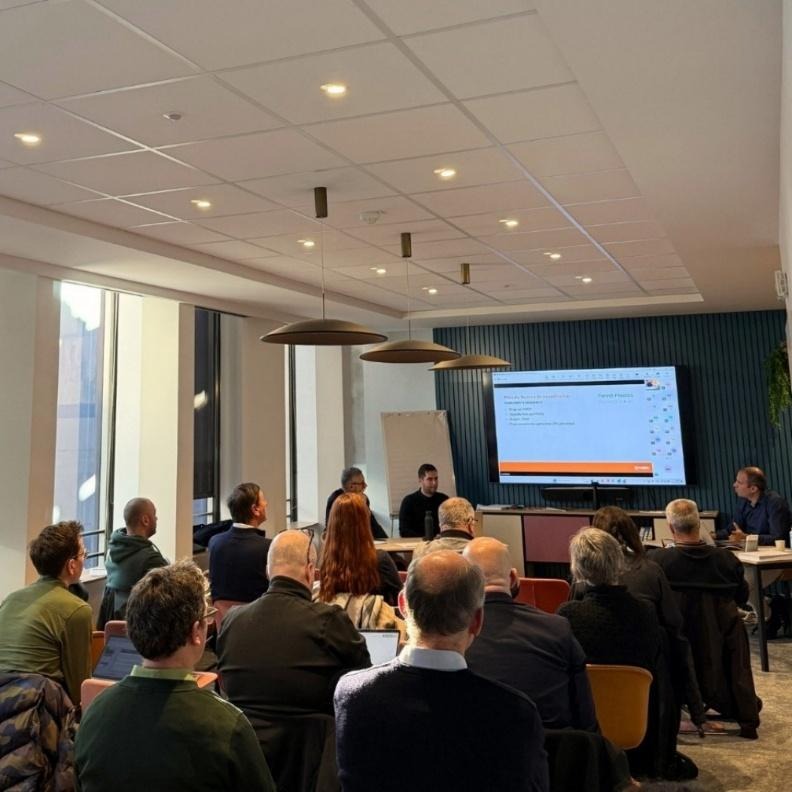
On 5 December, the CPA organised a day dedicated to tree guards and shelters with the aim of developing a sustainable and structured solution for managing the end of life of these products in France. A look back at the event.
Background and objectives
Individual protection measures are essential for preserving plants, limiting losses that can reach up to 90% in cases of high pressure from game animals. The meeting organised by the CPA aimed to bring together all the relevant stakeholders in France and launch a collective discussion on how to manage the end of life of these products.
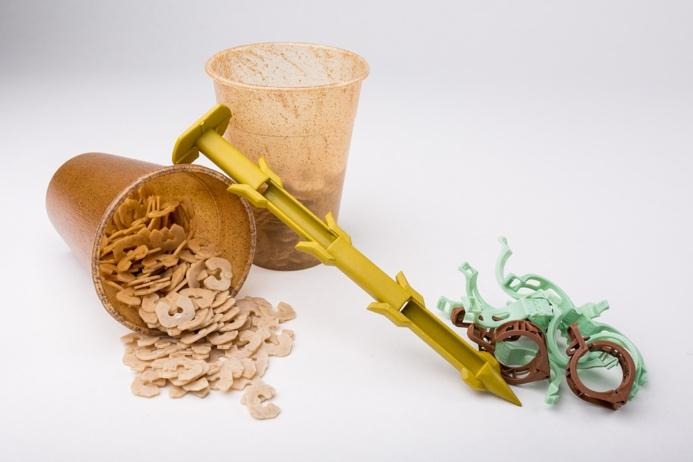
For several years now, these products have raised a major environmental and technical issue, at the crossroads of the wine-growing, arboriculture, agricultural hedgerow and forestry sectors, both public and private. Their widespread use has given rise to numerous local collection and recovery initiatives. For the CPA, the issue is all the more complex that the products used are identical regardless of the context of use, making it difficult to identify the sectors of application. A strictly sectoral approach is therefore complex, exposing the industry to the risks of collecting non-contributing products, under-reporting quantities placed on the market and, ultimately, causing economic imbalance in any future system. The challenge is therefore to develop a coherent and shared approach that can bring together all stakeholders around a multi-sector project, guaranteeing environmental performance, traceability of flows and the economic viability of the system.
The day demonstrated the strong mobilisation of the sector, bringing together more than 40 representatives: manufacturers, distributors, users, recyclers, researchers and scientific experts, public institutions (ADEME¹, Ministry of Agriculture and Food Sovereignty, CNPF², ONF³), professional bodies and industry associations. The day was organised around two key events:
– The morning was devoted to establishing the scientific and technical framework and presenting feedback on the end-of-life management of individual plant protection products.
– The afternoon was entirely dedicated to a collective reflection on the conditions for setting up a multi-sector scheme.
A multi-sector commitment
Mickaël Kedzierski (IRDL – Research institute) opened the discussion by presenting the results of the MICROSOF project, which highlights the presence of microplastics in all French soils. Philippe Van Lerberghe (IDF⁴, CNPF) then gave a technical overview of plant protection, highlighting the biodegradable and compostable alternatives available, as well as their limitations in terms of useful life, end-of-life disposal and additional purchase costs. This was followed by a presentation on PEFC certification, which aims to preserve and promote woodland equilibrium by encouraging sustainable management practices, including waste control.
The rest of the morning was devoted to feedback on current practices. For the forestry sector, the CNPF Grand Est presented the COLLEC’TIONS project, which carried out an inventory of the protections used in the region, a study of biodegradable alternatives, as well as pilots to qualify the methods and duration of protection per hectare, their collection and recovery with local actors. In the United Kingdom, TUBEX launched a collection system for tree guards and shelters in 2020. In five years, the project has proven to be a success, growing from 3 tonnes collected in the first year to 73 tonnes in 2024, with even more ambitious targets for the coming years. In 2023, TUBEX even went a step further by reintegrating recycled granules from the collected protective covers into the manufacture of its own products.
There are many variations of passages of Lorem Ipsum available, but the majority have suffered alteration in some form, by injected humour, or randomised words which don't look even slightly believable. If you are going to use a passage of Lorem Ipsum, you need to be sure there isn't anything embarrassing hidden in the middle of text. All the Lorem Ipsum generators on the Internet tend to repeat predefined chunks as necessary, making this the first true generator on the Internet. It uses a dictionary of over 200 Latin words, combined with a handful of model sentence structures, to generate Lorem Ipsum which looks reasonable. The generated Lorem Ipsum is therefore always free from repetition, injected humour, or non-characteristic words etc.
From this magazine