

 Our Mission & Values
 Governance & Partnerships
 Global Reach
 Our impact
 Agricultural Solutions
 Our Environmental Responsibility
 All Our Magazines
 Articles Library
 Our Subscriptions


Plasticulture in Latin America: milestones, challenges, and the path toward environmental sustainability
AUTHOR : H. F. Castellón Petrovich, CIDAPA’s President and CIPA’s Vice chairman
Presented at the 11th International Conference on Technology & Applications of Biodegradable, Compostable, and Biobased Plastics (ICTABP11) held in Beijing in November 2025, the original conference provides a comprehensive look at the evolution of plasticulture in Latin America. This article summarises the key points.
Global and regional context of plasticulture
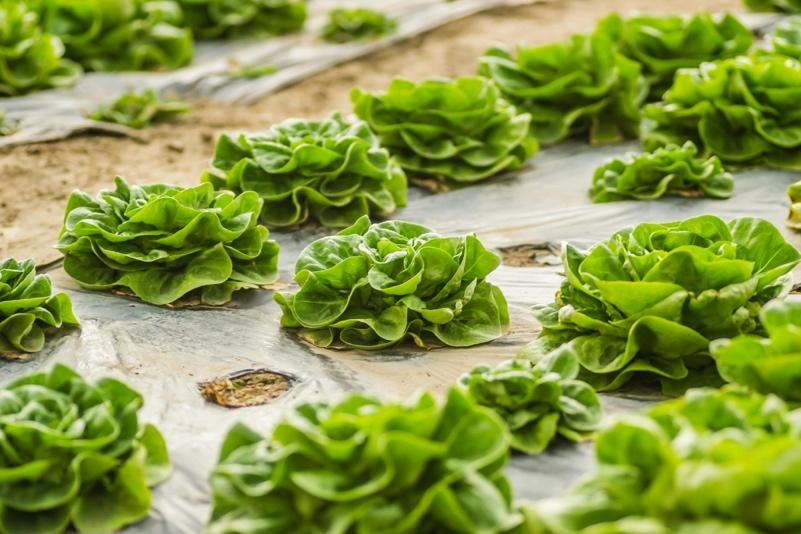
Plasticulture – the application of plastics in agriculture – has transformed food production worldwide. From early low-cost greenhouses in the U.S.A. (Emery Emmert, 1946) to drip irrigation in Israel (Simcha Blass, 1965) and China’s intensive plastic‑assisted agriculture from 1978 onward, plasticulture milestones have supported agriculture’s intensification, particularly in harsh climates.
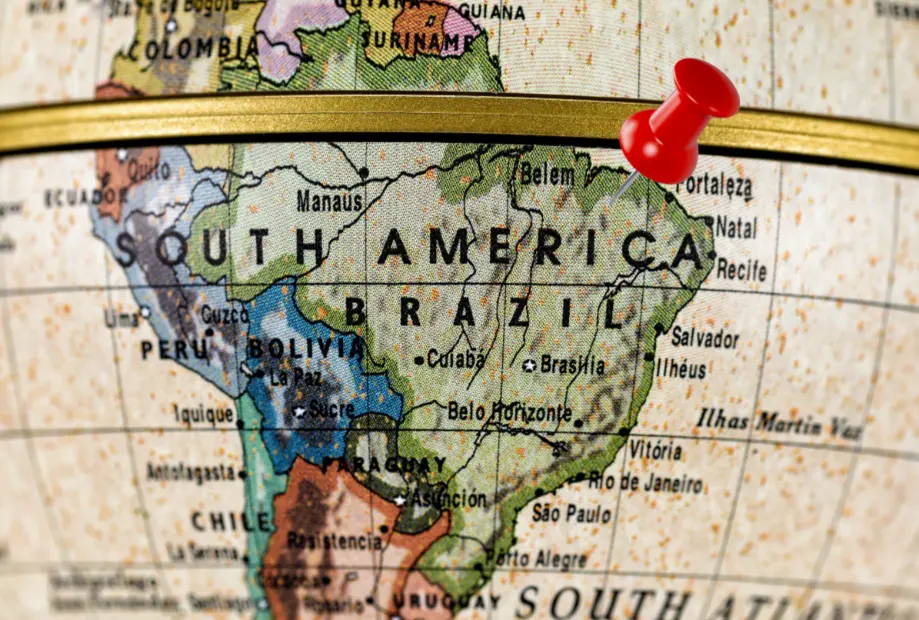
Worldwide adoption varies widely: Asia dominates both protected crops and mulching, followed by Europe, Latin America, and North America. Latin America alone accounts for 126,000 hectares of protected crops and over 580,000 hectares of mulched crops, demonstrating the sector’s significant regional footprint.
Environmental sustainability challenges
Plasticulture faces many challenges, but the most important are climate change and environmental sustainability, followed by the increase in the world population, water scarcity, the need to develop agriculture with less pesticides, the scarcity of agricultural soils, and the shortage of labour in the field.
There are many variations of passages of Lorem Ipsum available, but the majority have suffered alteration in some form, by injected humour, or randomised words which don't look even slightly believable. If you are going to use a passage of Lorem Ipsum, you need to be sure there isn't anything embarrassing hidden in the middle of text. All the Lorem Ipsum generators on the Internet tend to repeat predefined chunks as necessary, making this the first true generator on the Internet. It uses a dictionary of over 200 Latin words, combined with a handful of model sentence structures, to generate Lorem Ipsum which looks reasonable. The generated Lorem Ipsum is therefore always free from repetition, injected humour, or non-characteristic words etc.
From this magazine