

 Notre mission et nos valeurs
 Gouvernance et partenariats
 Portée mondiale
 Notre impact
 Solutions pour l'agriculture
 Notre responsabilité environnementale
 Tous nos magazines
 Bibliothèque d'articles
 Nos abonnements


Microplastics risks of agricultural mulch films: why material systems matter in field use

AUTEUR : Yihang LI, Graduate student
Qi LIU, Associate Professor (corresponding author: liuqi@caas.cn)
Key Laboratory of Prevention and Control of Residual Pollution in Agricultural Film
Ministry of Agriculture and Rural Affairs
Institut de l'environnement et du développement durable en agriculture
Chinese Academy of Agricultural Sciences
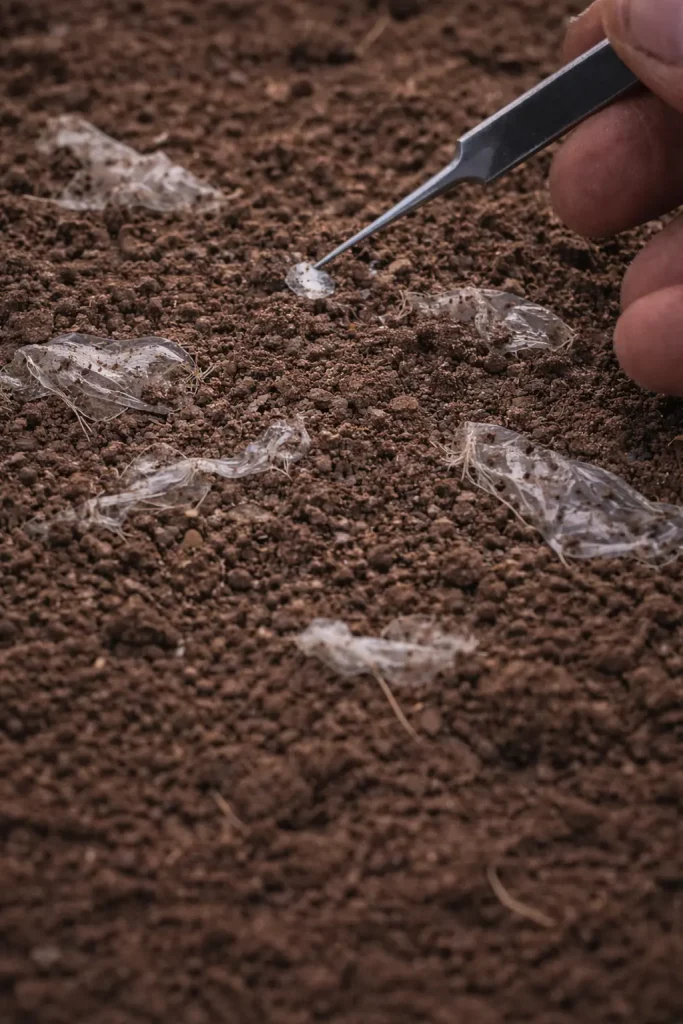
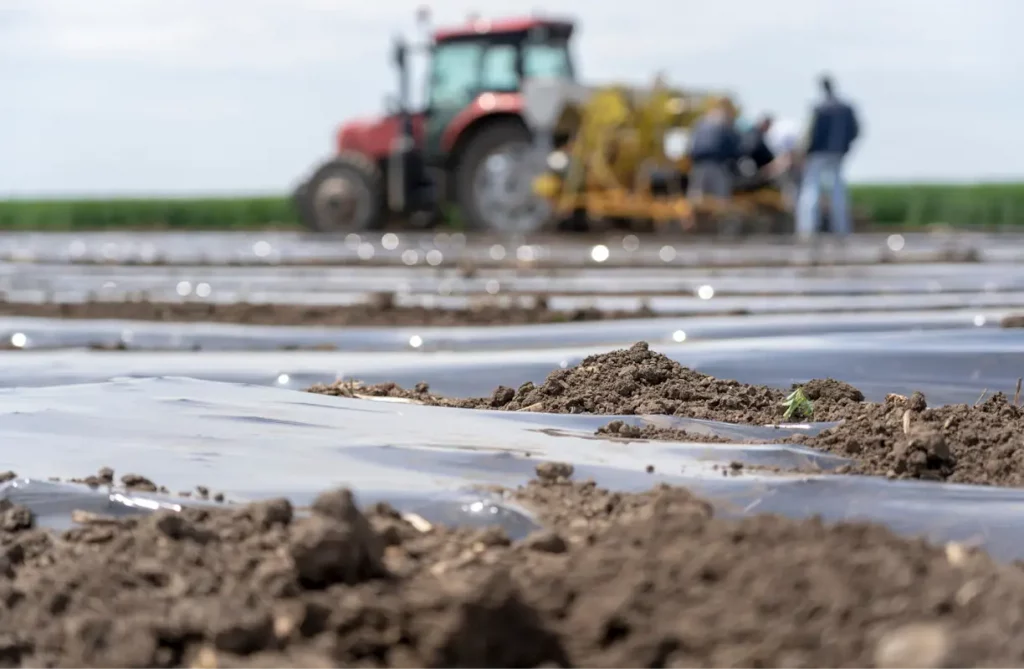
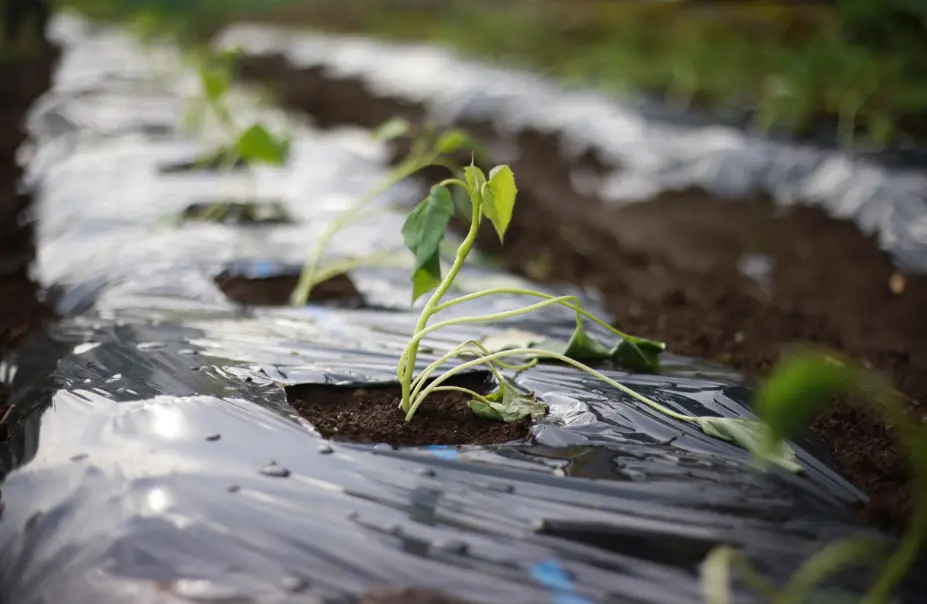
There are fundamental differences in the generation, transformation, transport, and end of life of different types of agricultural mulch films in the field environment, which directly determine the risk of microplastic release. Researchers from the Chinese Academy of Agricultural Sciences give us an insight based on the different types of mulch films.
Polyethylene Mulching Films
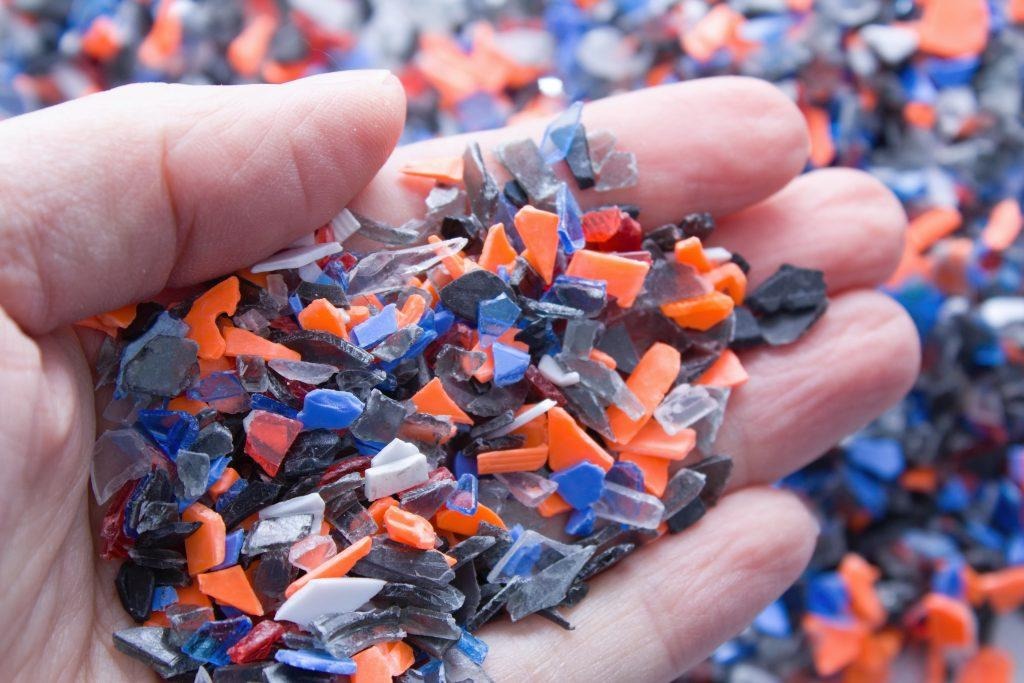
At the molecular levers, polyethylene (PE) is a linear polymer formed through the homopolymerisation of hundreds to thousands of ethylene molecules or copolymerisation with a small quantity of 1-olefin. During the field aging process, polyethylene mulch films are subject to thermal stress, moisture, mechanical abrasion and the ultraviolet (UV) exposure primarily originating from sunlight, causing chain scission, embrittlement and subsequent fragmentation into microplastics (MPs).
In actual production and application, the quality of raw materials is one of the key factors affecting the stability of polyethylene film. Research has shown that low-quality PE (virgin or recycled) exhibits reduced mechanical strength, and is more susceptible to accumulate oxidative functional groups, such as hydroxyl and carboxyl groups, during the long-term natural degradation process. This oxidative degradation is often accompanied by polymer chain breakage and a decline in material structure and mechanical properties. This makes low-quality PE more likely to fracture under oxidative aging stress, consequently, to generate higher quantities of MPs. On the contrary, by appropriately adding stabilising agents such as antioxidants, light stabilisers and UV absorbers to the system can significantly delay its UV photoaging process, effectively inhibit photo-oxidation degradation, and maintain higher mechanical properties at the same time, thereby potentially reducing the release of MPs.
Photo-oxidative Degradable Mulch Films
Photo-oxidative degradable mulch films are a type of agricultural mulching material that contains photo initiators or oxidation catalysts to promote their physical fragmentation and chemical degradation in the presence of light and thermal exposure.
Il existe de nombreuses variantes de passages de Lorem Ipsum, mais la majorité d'entre eux ont été altérés d'une manière ou d'une autre, en y injectant de l'humour ou des mots aléatoires qui n'ont pas l'air un tant soit peu crédibles. Si vous souhaitez utiliser un passage de Lorem Ipsum, vous devez vous assurer que rien d'embarrassant n'est caché au milieu du texte. Tous les générateurs de Lorem Ipsum sur Internet ont tendance à répéter des morceaux prédéfinis selon les besoins, ce qui fait de ce générateur le premier véritable générateur sur Internet. Il utilise un dictionnaire de plus de 200 mots latins, combiné à une poignée de structures de phrases modèles, pour générer un Lorem Ipsum d'apparence raisonnable. Le Lorem Ipsum généré est donc toujours exempt de répétitions, d'humour injecté, de mots non caractéristiques, etc.
Extrait de ce magazine